 Save
Save I discovered egg crepes by accident on a Sunday morning when I had a craving for something light but filling, and all I could think to do was toss eggs into my blender with a splash of milk. The result was this impossibly thin, delicate crepe that cooked in minutes, and suddenly breakfast felt like something special. Now whenever I make them, I'm reminded of that discovery—how the best kitchen moments often come from just trying something without overthinking it.
I made these for a friend who's always rushing out the door, and watching her face when she realized something this elegant took less time than her usual coffee run was priceless. She now texts me for the recipe whenever she wants to impress someone at brunch, which makes me smile every time.
Ingredients
- 4 large eggs: The backbone of this crepe—they need to be at room temperature or close to it so they blend into the silkiest base.
- 2 tablespoons water or milk: This small amount of liquid is what makes the eggs airy and frothy when blended, creating those delicate bubbles that cook into a tender crepe.
- Pinch of salt and black pepper: Don't skip these; they season the entire crepe evenly since everything gets blended together.
- 1 teaspoon olive oil or butter: Just enough to prevent sticking without making the crepe greasy or heavy.
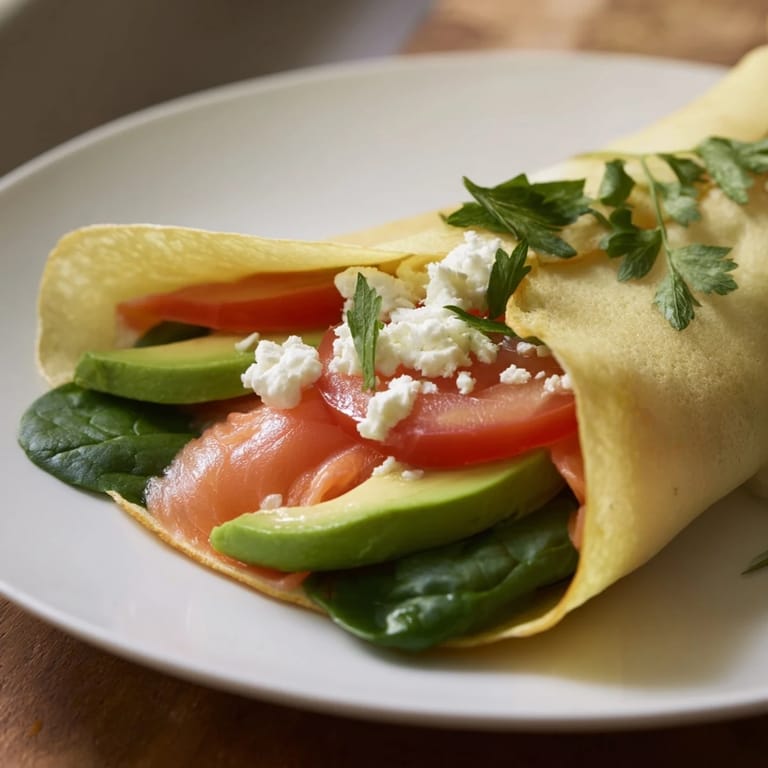
- Baby spinach, smoked salmon, feta, tomato, avocado, fresh herbs: These are just suggestions—use what you have on hand or what sounds good that morning.
Tired of Takeout? 🥡
Get 10 meals you can make faster than delivery arrives. Seriously.
One email. No spam. Unsubscribe anytime.
Instructions
- Blend until it's cloud-like:
- Crack your eggs into the blender with the water or milk, salt, and pepper. Blend on high for about 30 to 45 seconds until you see the mixture turn pale and foamy—you'll actually hear the change as the motor works less hard through the air-filled batter.
- Get your pan ready:
- Heat a non-stick skillet over medium heat and brush it lightly with oil or butter. The pan should be warm but not screaming hot, or your crepe will cook too fast and tear.
- Pour and tilt into magic:
- Pour half of your frothy egg mixture into the center of the skillet and immediately tilt and rotate the pan so the batter spreads into a thin, even layer across the entire bottom. This part feels like a small dance at first, but you'll find your rhythm quickly.
- Cook until it's set:
- Let it cook for about 1 to 2 minutes—you'll notice the edges will start to pull away from the sides of the skillet and the top will look mostly set. This is your signal to flip.
- The gentle flip:
- Using a spatula, carefully slide it under the crepe and flip it in one confident motion. Cook the other side for just 30 seconds to set it, then transfer to a plate.
- Make the second one:
- Repeat with the remaining egg mixture, tilting and cooking with the same care you gave the first.
- Fill and fold:
- Arrange your chosen fillings in a line down the center of each warm crepe, then fold it in half or roll it up to enclose them. Serve immediately while it's still warm.
 Save
Save There's something almost meditative about watching the crepe set in the pan, knowing that in moments it will be folded around whatever brings you joy that morning. That moment of transformation from liquid to delicate wrap never gets old.
Sweet vs. Savory—Both Are Equally Easy
The beauty of egg crepes is that the same base works beautifully for both directions. For savory, pile on your smoked salmon and dill, your spinach and feta, whatever you've got in the fridge that sounds good. For sweet, swap the herbs for berries, a dollop of yogurt, and a light drizzle of honey or maple syrup. The crepe itself is completely neutral, so it becomes whatever you want it to be.
Why Blending Makes All the Difference
You might wonder why blending matters when you could just whisk eggs in a bowl. The answer is air—blending incorporates tiny bubbles that make the cooked crepe impossibly light and tender, almost cloud-like. A whisked egg mixture gives you a denser, more traditional result. The blender version feels almost delicate by comparison, and it cooks faster too, which means less time hovering over the stove.
How to Make This Work for Your Life
These crepes are endlessly flexible, which is why I've made them dozens of times with different fillings depending on what's in my kitchen. On days when I have fresh herbs and good cheese, I go savory. When berries are on sale and I'm craving something sweet, I go the other direction. The crepe itself is ready in under 20 minutes start to finish, so it's never a chore—it's always a small gift to yourself.
- Make the egg mixture ahead of time and store it in the fridge for up to a day, then cook the crepes fresh when you want them.
- Have your fillings prepped and ready before you start cooking, so you can assemble and serve while everything is still warm.
- Leftovers can be wrapped in parchment and refrigerated for a quick grab-and-go breakfast, though they're best eaten fresh.
 Save
Save This recipe has become my go-to whenever I want to feel like I've made something thoughtful without spending my whole morning in the kitchen. It's simple, it's fast, and somehow it always tastes just a little bit special.
Recipe Guide
- → How do I achieve a thin and even crepe?
Pour the egg mixture slowly into a hot, lightly oiled skillet and tilt the pan to spread the layer thinly and evenly before cooking.
- → Can I use dairy-free milk in the egg mixture?
Yes, water or any dairy-free milk works well to help froth the eggs without altering flavor significantly.
- → What fillings work best for these crepes?
Try baby spinach, smoked salmon, ham, feta, fresh herbs, or for sweeter options, berries and yogurt.
- → How long should the crepes be cooked?
Cook each side for 1-2 minutes until the edges lift easily and the bottom is set, then flip and cook an additional 30 seconds.
- → Are these crepes suitable for a low-carb diet?
Yes, the crepes are low in carbohydrates, especially when filled with suitable ingredients like vegetables and proteins.