 Save
Save The first time I truly understood the art of a charcuterie board was sitting at a crowded bistro in Lyon, watching an older woman arrange meats and cheeses on a slate platter with the same care a painter uses for canvas. She caught me staring and smiled, sliding a piece of shaved Gruyère toward me. That moment—the contrast of rough, smoky beef against delicate, translucent cheese—changed how I thought about sharing food. This platter is my love letter to that afternoon, a rustic yet refined celebration that feels both effortless and intentional.
I made this for my partner's friends one summer evening when the kitchen was too hot to turn on the stove. I was nervous it wouldn't feel like "enough," but watching them quiet down as they gathered around the board, reaching for a piece of ham here, a shaving of cheese there, trading small bites and stories—that's when I learned that sometimes the best meals are the ones that invite people to slow down and linger.
Ingredients
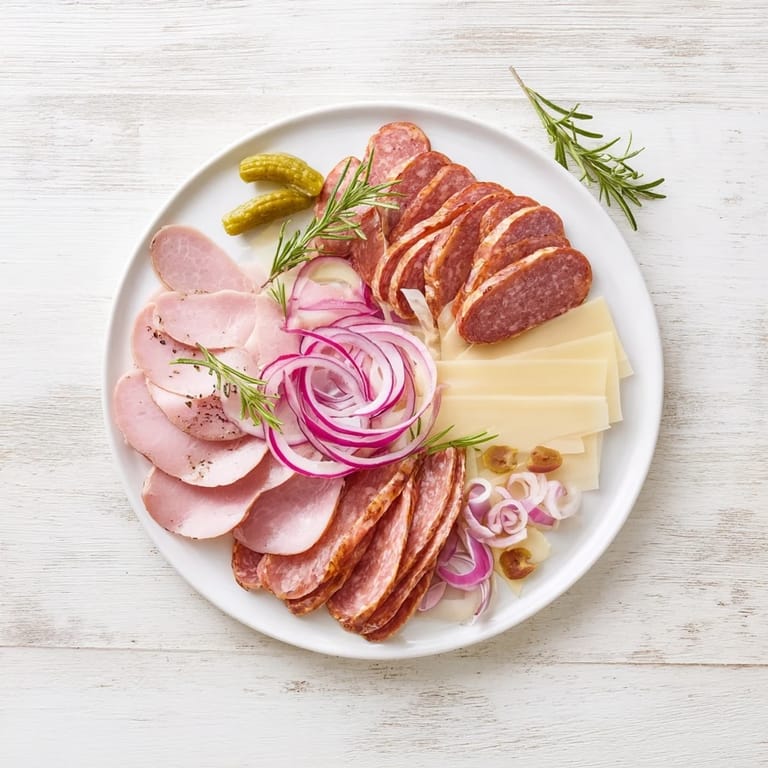
- Smoked beef, 120 g: Hand-tear or thickly slice this smoky anchor—it's the bold foundation that everything else dances around.
- Rustic country ham, 120 g: The salty, tender soul of the board; rough chop it to keep the rustic promise alive.
- Smoked sausage, 120 g: Cut thick rounds or wedges so every bite has presence and smokiness.
- Parmigiano Reggiano, 60 g: Use a cheese plane to shave paper-thin ribbons; the brittleness against the creamy ham is magic.
- Aged Manchego, 60 g: Its nutty warmth bridges the gap between the bold meats and delicate presentation.
- Gruyère, 60 g: Shave it thin and watch how the light catches it—this cheese is a small luxury that costs almost nothing.
- Cornichons, small handful: Their brine-sharp brightness cuts through the richness like a small, honest punctuation mark.
- Red onion, 1 small: Slice tissue-thin so it's more flavor suggestion than substance; raw onion brings freshness the meats need.
- Grainy mustard, 2 tbsp: A dollop here and there invites people to build their own bites, making them feel clever.
- Fresh thyme or rosemary: These sprigs aren't just garnish—brush your hand against them and the aroma prepares everyone for what's coming.
- Rustic country loaf or crusty baguette: Optional, but it gives people permission to make little open-faced moments if they want.
Tired of Takeout? 🥡
Get 10 meals you can make faster than delivery arrives. Seriously.
One email. No spam. Unsubscribe anytime.
Instructions
- Arrange the meats with intention:
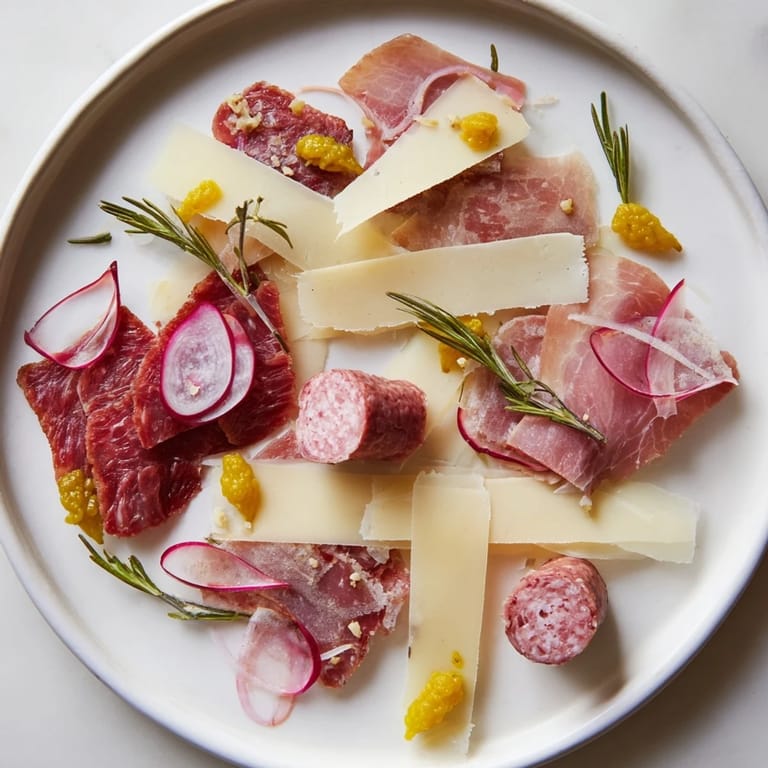
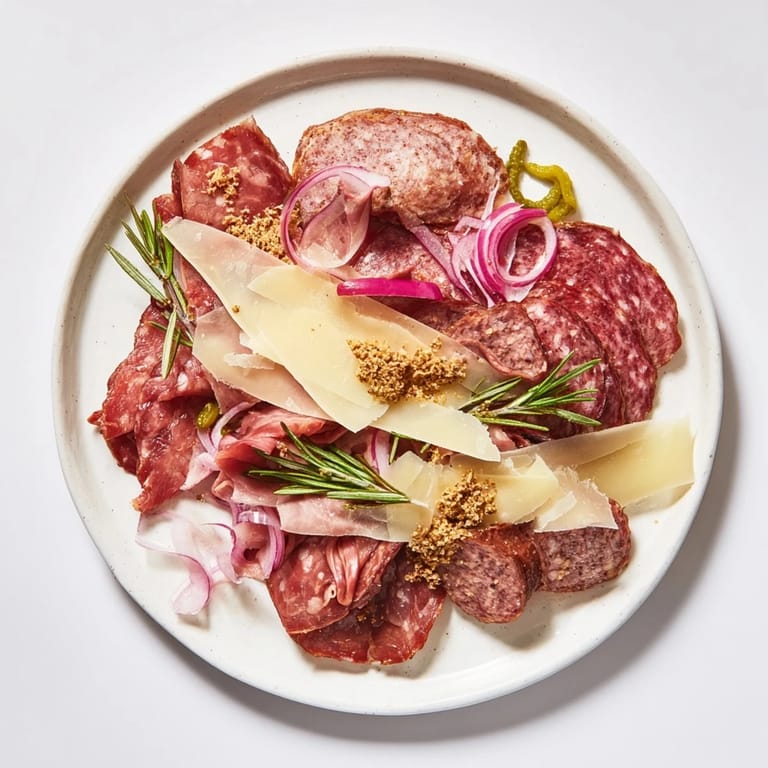
- Lay the smoked beef, ham, and sausage on your board in loose, overlapping mounds rather than perfect rows—you want it to look like you grabbed things you loved, not like you measured everything twice. Let there be empty spaces; they're your blank canvas.
- Shave the cheeses into ribbons:
- Use steady, confident strokes with your cheese plane or peeler, letting the cheese curl and fold naturally. Drape these shavings over and around the meats like you're tucking a soft blanket—some should catch the light, some should rest in the shadows.
- Add the sharp and pickled notes:
- Scatter cornichons in small clusters and dot red onion slices among the meats. Small dollops of mustard should feel like discoveries—place them where you imagine someone's hand might reach next.
- Crown it with herbs:
- Lay fresh thyme or rosemary sprigs across the top in a way that feels natural, not fussy. Step back and look—if it makes you want to reach for something, it's ready.
- Serve right away:
- The moment you finish arranging is the moment to bring it to the table, while the meats are still cool and the cheeses haven't begun to sweat.
 Save
Save There was a quiet moment during that dinner when someone asked why I'd bothered arranging things so carefully when we could have just put it all in bowls. I didn't have a ready answer then, but I think I know now: it's because food arranged with care says something wordless about how much you value the people sitting around it. This platter whispers that you slowed down, that you thought about them.
The Art of Shaving Cheese
Shaving cheese is one of those kitchen skills that looks harder than it is, but once you get it, you feel quietly proud every time you do it. Angle your peeler or plane about forty-five degrees and use long, steady strokes toward you; the best shavings are the ones you create without thinking too hard. The thinner the cheese, the more light passes through it, and the more elegant everything becomes. I learned this by accident, pushing too hard and creating thick, chunky pieces that looked nothing like what I'd imagined. Now I prefer the vegetable peeler for most cheeses—it gives you more control and finer ribbons that drape like silk.
Building Your Board Around What You Love
The beauty of this board is that it's a template, not a rule. If you don't like smoked beef, swap it for prosciutto or salami. If Manchego doesn't speak to you, reach for aged Gouda or aged cheddar instead. I've made this platter dozens of times and it's never quite the same twice, because what I reach for depends on the season, who's coming over, and what I found at the market that day. The structure stays the same—rough meats, delicate cheeses, sharp accompaniments—but the conversation is always different. Think of this less as a recipe you follow perfectly and more as a permission slip to trust your own taste.
Wine Pairings and Other Companions
This board doesn't ask for much, but it does deserve to be sipped and savored alongside something good to drink. A bold red wine—something with tannins and depth—mirrors the smokiness of the meats beautifully. If you prefer white, look for something crisp and mineral-driven that cuts through the richness without apology. Beyond wine, a cold cider works, a dry sherry makes everything feel special, and if you're not drinking alcohol, sparkling water with a squeeze of lemon brings its own kind of clarity to the flavors. I once served this board with nothing but strong coffee and fresh water, and honestly, the company was so good nobody remembered what they were drinking.
- Pair with a full-bodied red like a Côtes du Rhône or a young Châteauneuf-du-Pape.
- Or reach for a crisp white like a Sancerre or a mineral-driven Albariño.
- Whatever you choose, chill it properly and taste it first—good wine makes everything taste better.
 Save
Save This platter is a small rebellion against the idea that hospitality requires hours in the kitchen. It says that caring for people can look like taking time to arrange things beautifully, like choosing ingredients thoughtfully, like inviting them to linger over something simple and honest. Make this board whenever you want to say that without words.
Recipe Guide
- → What type of meats are best for this platter?
Thickly sliced smoked beef, rustic country ham, and smoked sausage provide a hearty and bold flavor profile.
- → How should the cheeses be prepared?
Use a vegetable peeler or cheese plane to create thin, translucent ribbons that drape elegantly over the meats.
- → What accompaniments enhance the platter?
Cornichons, thinly sliced red onion, grainy mustard, and fresh herbs like thyme or rosemary add brightness and contrast.
- → Can this platter accommodate dietary restrictions?
It is naturally gluten-free when served without bread, and low carb due to its emphasis on meats and cheeses.
- → What serving tools are recommended?
A sharp chef’s knife, cheese plane or vegetable peeler, and a large serving board or platter make assembly easy.
- → What beverage pairs well with this selection?
A bold red wine or a crisp, dry white wine complements the smoky and savory notes beautifully.