 Save
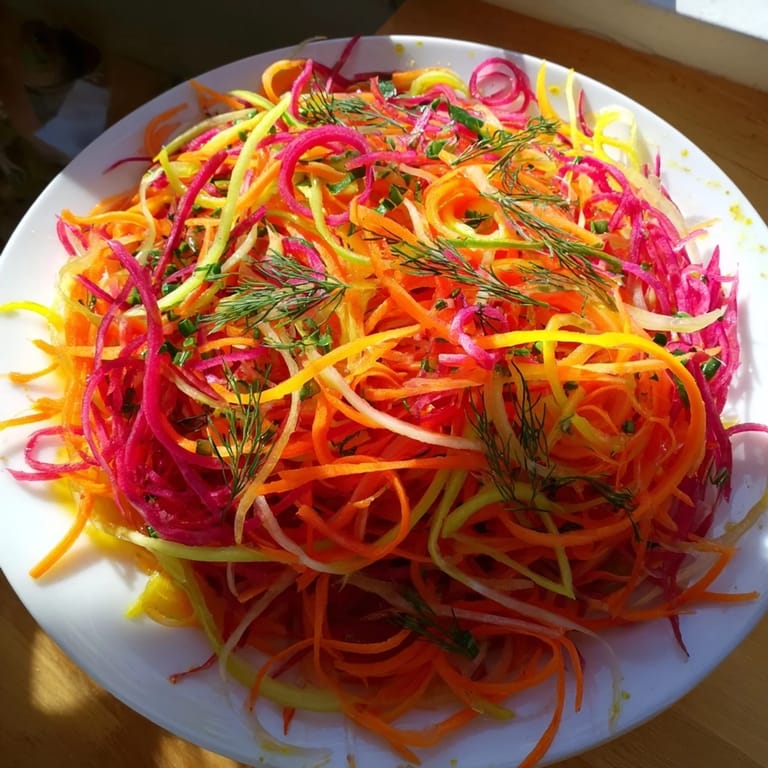
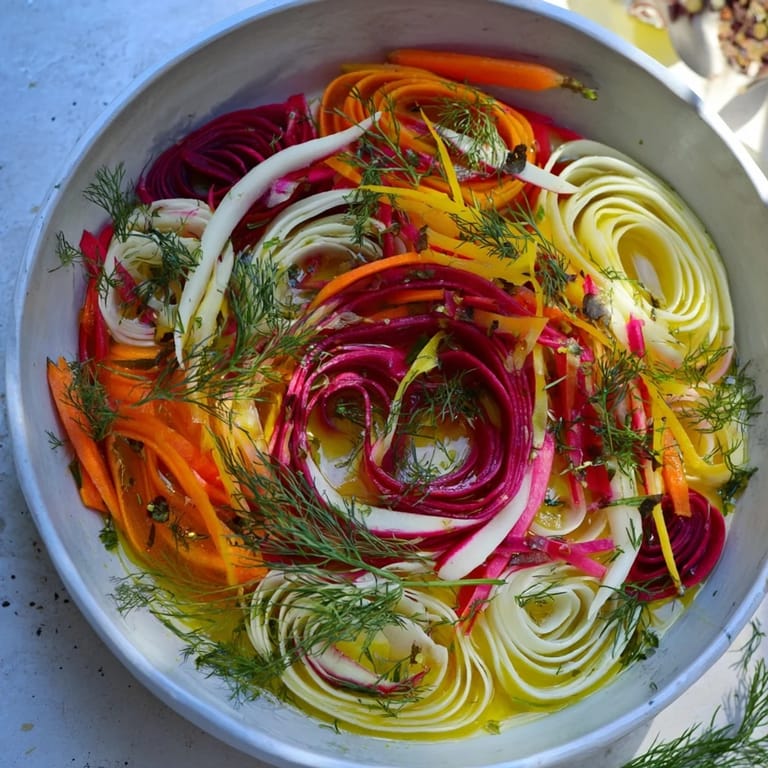
Save I discovered this dish at a farmers market in late summer when a vendor was arranging vegetables in spiraling patterns to catch light. Watching those paper-thin ribbons catch the sun made me think: why not make something you can actually eat that looks like that? The first time I plated it for friends, someone literally gasped before tasting it. That moment—when a salad becomes something people want to photograph—changed how I think about simple ingredients.
I made this for a dinner party where I was nervous about impressing my partner's colleagues. The conversation had been a bit stiff until someone noticed the salad spinning on the plate. Suddenly everyone was leaning in, asking how I made it, and the whole energy shifted. Turns out the best icebreaker isn't small talk—it's food that makes people pause.
Ingredients
- Fennel bulb: Slices into the most delicate, licorice-tinged ribbons that crisp up beautifully—this is the backbone of the spiral.
- Rainbow carrots: Different colors create the visual magic; they also have varying sweetness levels that play off each other.
- Golden beet: Sweet, earthy, and won't bleed into everything like a red beet would.
- Red onion: Just a whisper of sharpness and color to balance the sweetness.
- Fresh dill and chervil: These are the wispy, feathery herbs that complete the spinning effect—don't skip them or use dried.
- Microgreens: The final sprinkle that adds texture and a hint of peppery punch.
- Extra-virgin olive oil: Use one you actually like; it's the only oil here, so it matters.
- Lemon juice, honey, Dijon mustard: Together they create a balanced dressing that's tangy, slightly sweet, and mustard-sharp in the best way.
Tired of Takeout? 🥡
Get 10 meals you can make faster than delivery arrives. Seriously.
One email. No spam. Unsubscribe anytime.
Instructions
- Slice everything paper-thin:
- A mandoline is your friend here—adjust it to the thinnest setting and take your time. You want ribbons so thin they're almost see-through, which is where the magic happens.
- Give the vegetables a cold bath:
- Ice water for 5 to 10 minutes transforms floppy slices into crisp, curled ribbons that hold their shape. Dry them well so the dressing adheres, not pools.
- Make the dressing:
- Whisk the oil, lemon, honey, and mustard together until emulsified—it should taste bright but balanced, never too sour or too sweet.
- Build the spiral:
- On a large plate, start from the center and arrange ribbons in overlapping circles, letting them extend outward and curl slightly over the edge for that spinning effect.
- Top with herbs and greens:
- Scatter dill and chervil everywhere, then concentrate microgreens toward the outer edge for a wispy, intentional look.
- Dress at the last second:
- Drizzle just before serving so the salad stays crisp and the presentation holds its shape.
 Save
Save There's something about watching someone's face light up when they realize a salad can be both a feast for the eyes and genuinely delicious. That's when food stops being fuel and becomes a moment.
The Mandoline Moment
The mandoline is scary the first time—I nicked my knuckle on my third pass and learned quickly to use the guard. But once you find the rhythm, it becomes almost meditative, watching those ribbons curl out like delicate ribbons. If you don't have a mandoline, a very sharp vegetable peeler works, just know it'll take longer and require more patience with consistency.
Playing with Color and Texture
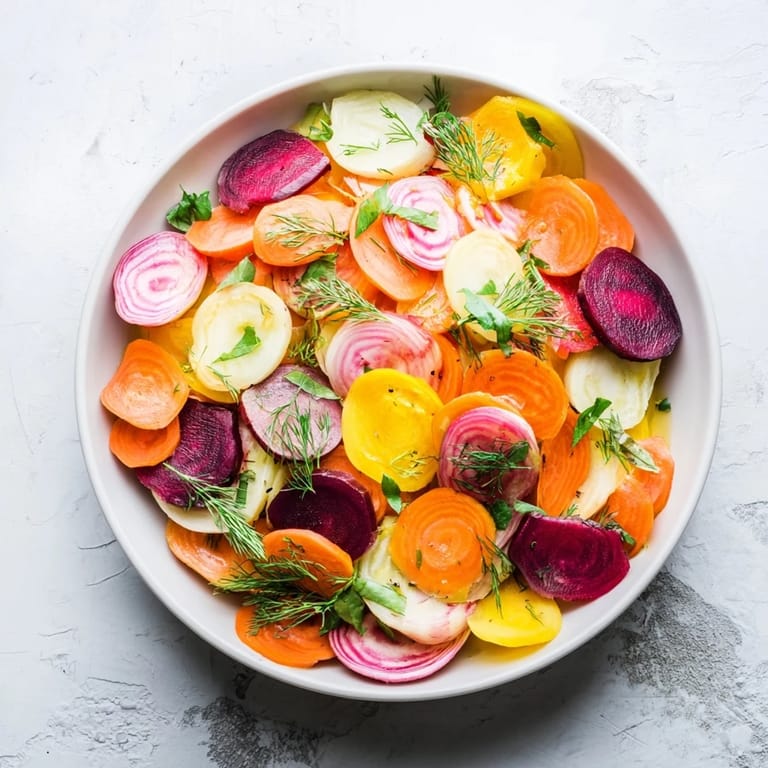
The beauty of this salad is that it's flexible without losing its identity. A red or golden beet works just as well; a mix of white, purple, and orange carrots creates even more visual interest than a single color family. I've even added paper-thin radish slices and thin cucumber ribbons without disrupting the flow—just make sure everything is cut to the same thickness so it all crisps and wilts at the same rate.
Serving and Storage
This salad is best served the moment it's plated; after 20 minutes, the ribbons start to soften and lose that jaw-dropping crunch. You can prep all the components ahead of time—shave and soak the vegetables up to 4 hours before, make the dressing in the morning, and store the herbs separately—then assemble just before guests arrive. This is also a forgiving dish to customize, so keep tasting as you build it and adjust seasoning to your preference.
- Refrigerate shaved vegetables in a covered bowl with a damp paper towel to keep them crisp until assembly.
- Make the dressing at least 30 minutes ahead so the mustard and honey fully integrate.
- Have all herbs washed and dried before you start plating for a smooth final moment.
 Save
Save This salad taught me that presentation and taste don't have to be at odds. It's proof that you can make something stunning without fussing or pretending to be a chef.
Recipe Guide
- → What is the best tool for shaving the vegetables?
A mandoline slicer or a sharp vegetable peeler works best for creating thin, wispy ribbons.
- → Why soak the shaved vegetables in ice water?
Soaking them in ice water crisps and curls the edges, adding texture and a lively appearance.
- → Can I substitute the herbs used?
Yes, parsley can replace chervil, and microgreens can be swapped for other fresh greens for variety.
- → How should the salad be dressed?
The dressing of olive oil, lemon juice, honey, and Dijon mustard is drizzled lightly over the arranged vegetables just before serving.
- → What colors of carrots work best?
Using rainbow carrots in different colors enhances the visual appeal and adds subtle flavor differences.