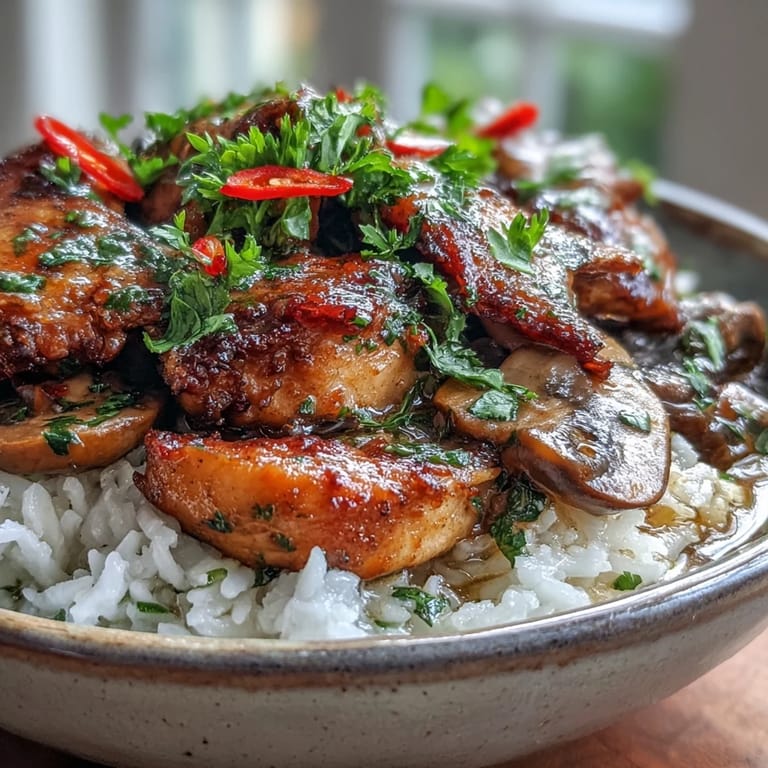
 Save
Save There's something about the smell of curry paste hitting hot oil that stops me mid-thought, every single time. I discovered this soup on a gray Thursday afternoon when I had chicken thighs that needed using and suddenly remembered a trip to Bangkok years ago—not the tourist version, but the real one, where I watched a street vendor stir enormous pots of curry broth that seemed to contain pure comfort. This version is my attempt to bottle that feeling into something achievable on a weeknight, and somehow it works.
I made this for my sister when she came home from a difficult project at work, and she sat at my kitchen counter with a spoon in one hand, just eating quietly for a while before she even said hello. Food doesn't always need to fix things, but sometimes it's just the right thing at the right moment, and watching someone's shoulders drop three inches lower because of something you made feels like a small magic.
Ingredients
- Chicken thighs (500 g): They stay tender and flavorful in the broth where white meat would dry out, and honestly they're more forgiving if you're not watching the clock obsessively.
- Mushrooms (200 g): Use whatever you have—cremini, button, oyster—they all absorb the coconut and curry flavors like little sponges.
- Carrots (2 medium): Sliced thin enough that they soften in the time the rice cooks, so nothing sits around waiting to be tender.
- Onion, garlic, ginger (1 onion, 2 cloves, 1 tablespoon): This is the foundation that makes people ask what smells so good before they even see the bowl.
- Jasmine rice (120 g): It cooks right in the broth and picks up all those subtle flavors instead of being cooked separately like an afterthought.
- Coconut milk (400 ml): Full fat is non-negotiable here—the skim version leaves you with broth that tastes like it's apologizing for existing.
- Chicken stock (1 liter): Use homemade if you have it, but good quality store-bought works just fine.
- Red curry paste (2–3 tablespoons): Start with 2 and taste as you go; some brands are spicier than others and you can always add more.
- Lemongrass and kaffir lime leaves: These are the whisper underneath everything else, adding brightness that lime juice alone can't quite capture.
- Fish sauce (1 tablespoon): I know it smells strange in the bottle, but trust it—this is what makes the flavor depth feel effortless.
- Brown sugar and lime (1 teaspoon, 1 lime): Together they balance the heat and richness so nothing feels one-dimensional.
- Cilantro, chili, lime wedges for garnish: Don't skip these—they're what turns a good bowl into something you actually want to eat right now.
Tired of Takeout? 🥡
Get 10 meals you can make faster than delivery arrives. Seriously.
One email. No spam. Unsubscribe anytime.
Instructions
- Start with the aromatics:
- Heat oil in your pot over medium heat and add the onions, garlic, and ginger, stirring occasionally until the kitchen smells like something worth waking up for. You'll know it's ready when everything looks soft and golden, usually around 2–3 minutes.
- Wake up the curry paste:
- Add the red curry paste and let it cook with the aromatics for just one minute, stirring constantly—this releases all the flavor compounds that are about to make everything taste intentional. It will smell incredibly fragrant, almost peppery.
- Coat the chicken:
- Add your chicken pieces and stir them into the curry mixture for 2–3 minutes so they're sealed and starting to brown slightly. This keeps them from getting stringy later.
- Build the broth:
- Pour in the chicken stock and bring it to a gentle simmer, then add the carrots, mushrooms, lemongrass, and kaffir lime leaves. Stir it once and let it bubble quietly while you move to the next step.
- Add the rice:
- Stir in the jasmine rice right into the simmering broth and let it cook uncovered for 15–20 minutes, stirring occasionally. The rice will thicken the broth naturally as it releases its starch, and you'll know it's almost done when the grains look translucent and soft.
- Finish with cream and umami:
- Stir in the coconut milk, fish sauce, and brown sugar, then simmer gently for 5 more minutes just to marry all the flavors. Don't let it boil hard at this point or the coconut milk can separate.
- Season and serve:
- Fish out the lemongrass stalks and lime leaves, then taste and adjust with lime juice, fish sauce, or salt until it tastes balanced to you. Ladle it into bowls and finish with fresh cilantro, sliced red chili, and a lime wedge to squeeze over.
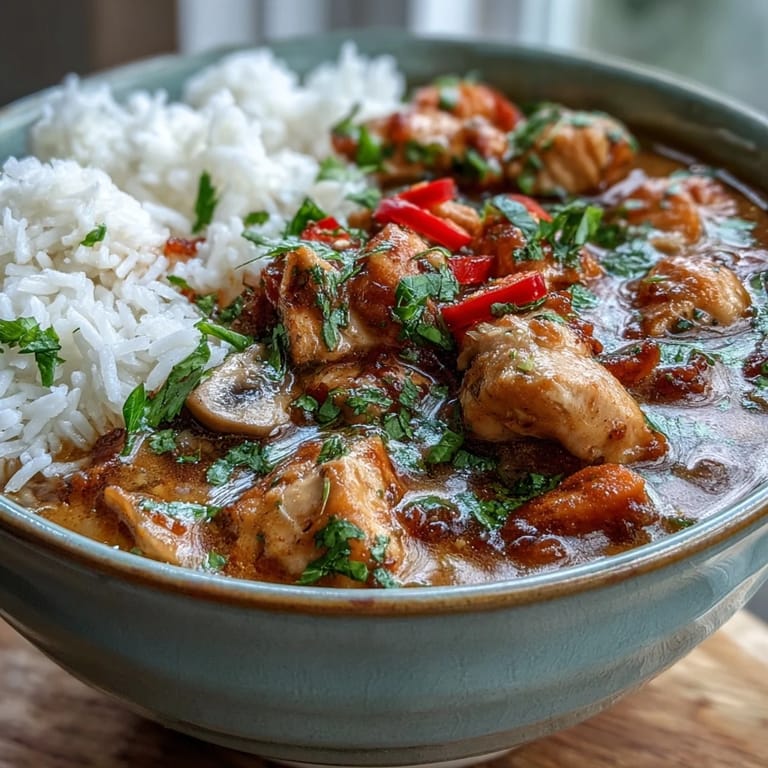 Save
Save There's a moment late in the cooking when you add the coconut milk and the broth shifts from golden to pale cream-colored, and the whole pot seems to exhale. That's when you know it's going to be good.
Why This Soup Works So Well
The genius of cooking the rice directly in the broth is that it does double duty—it softens and cooks the grain while simultaneously thickening and enriching the liquid around it, so you end up with this natural, creamy texture without needing cream or cornstarch. Every bite tastes intentional because the flavors have had time to get to know each other, and the chicken stays tender because it's cooking in moisture rather than drying out in concentrated heat.
How to Adjust It to Your Taste
This soup is forgiving in the best way—you can make it spicier by adding more curry paste or even a fresh chili or two, or earthier by throwing in extra mushrooms or even a handful of baby spinach at the end. If you prefer it less coconut-forward, reduce the coconut milk to 300 ml and use a bit more stock instead, or add other proteins like shrimp (which only need 3–4 minutes of cooking) or press tofu cubes instead of chicken if you're cooking for vegetarians.
Serving and Pairing Suggestions
This soup tastes even better if you let it sit for an hour or two and reheat it gently, because the flavors continue to deepen and meld—make it ahead if you're feeding people and want to feel less frazzled. It pairs beautifully with a crisp Riesling if you're drinking wine, or skip that entirely and serve with Thai iced tea sweetened with condensed milk and a pinch of salt, which feels right somehow.
- Extra jasmine rice on the side makes it heartier for people with bigger appetites.
- A simple cucumber salad with lime and fish sauce cuts through the richness nicely.
- Keep lime wedges and extra cilantro nearby so people can adjust the brightness to their preference.
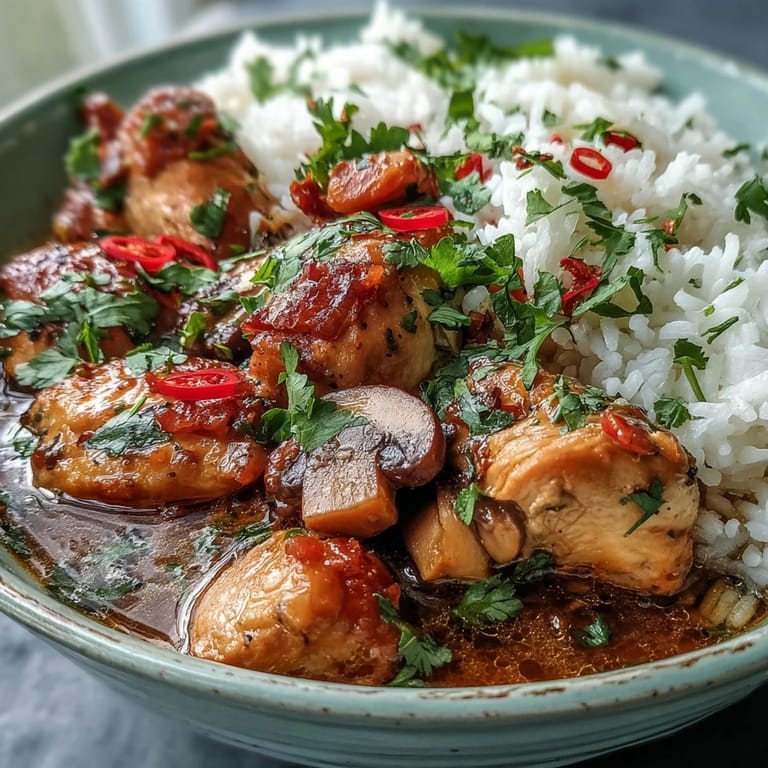 Save
Save This soup has become my answer to almost everything—a bad day at work, a friend who needs feeding, a Wednesday when I don't have energy for decisions. It tastes like someone cared enough to spend time cooking, even when you barely spent any time at all.
Recipe Guide
- → Can I make this soup vegetarian?
Absolutely. Replace the chicken with firm tofu cubes and substitute the chicken stock with vegetable broth. Omit the fish sauce or use a vegetarian alternative like soy sauce or tamari to maintain that savory depth.
- → How spicy is this curry soup?
The heat level depends entirely on your red curry paste. Start with 2 tablespoons for a mild warmth, or increase to 3 tablespoons for more spice. You can always add more paste later, but you can't remove it once it's in the pot.
- → Can I use brown rice instead of jasmine?
Yes, but adjust the cooking time. Brown rice typically requires 10-15 minutes longer to become tender. You may need to add extra broth or water as it simmers to prevent the soup from becoming too thick.
- → What can I substitute for kaffir lime leaves?
If you can't find fresh or dried kaffir lime leaves, simply omit them. The lime juice added at the end provides plenty of citrus brightness. Some cooks add a strip of lime zest during simmering as an alternative.
- → How long does this soup keep in the refrigerator?
Store cooled soup in an airtight container for up to 4 days. The rice will absorb more liquid as it sits, so add a splash of broth or water when reheating to restore the creamy consistency. Reheat gently over medium-low heat.
- → Can I freeze this curry soup?
Freezing works, but the rice texture may change slightly. For best results, freeze without the rice and cook fresh jasmine rice when you reheat. If freezing with rice, consume within 2 months and reheat slowly with extra liquid.